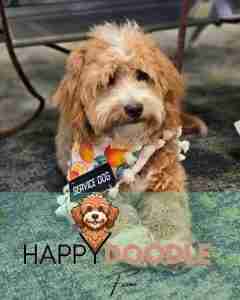
Goldendoodle Service Dogs: Training, Temperament & Suitability
Goldendoodles are increasingly popular as service dogs, prized for their intelligence, trainability, and often hypoallergenic coats. But are they the *right* service dog for you? At Happy Doodle Farm, we specialize in breeding *and* training Goldendoodles specifically for service work. This comprehensive guide will explore why Goldendoodles can excel, what to consider before getting one, how to train them (or partner with us for professional training), and answer frequently asked questions.
This post is part of our in-depth series on service dogs, therapy dogs, and emotional support animals. We recommend starting with Blog 1: Understanding the Different Roles of Service Dogs and Therapy Dogs for a foundational understanding.Why Are Goldendoodles Good Service Dogs? (Temperament & Training)
The Goldendoodle’s potential as a service dog stems from the best traits of its parent breeds: the Golden Retriever and the Poodle. We at Happy Doodle Farm have focused our breeding program on enhancing these traits.
The Intelligence Advantage: Poodle and Golden Retriever Genetics
Both Golden Retrievers and Poodles consistently rank among the most intelligent dog breeds. This inherited intelligence is *critical* for service work, allowing Goldendoodles to learn complex commands, solve problems, and adapt to their handler’s needs.
Learn more about the Goldendoodle breed.Temperament is Key: Friendliness, Patience, and a Desire to Please
A service dog must be more than just smart; it needs a stable, gentle, and eager-to-please temperament. Goldendoodles are generally known for their friendly and patient nature, making them well-suited for interacting with the public and providing consistent support. However, temperament is not guaranteed, which is why selecting a Goldendoodle from a reputable breeder that prioritizes temperament testing is crucial.
The Hypoallergenic Factor: Understanding Goldendoodle Coat Types (and Why Breeding Matters)
While no dog is truly 100% hypoallergenic, many Goldendoodles have low-shedding coats, a significant advantage for handlers with allergies. Understanding the different Goldendoodle generations is crucial:
- F1 Goldendoodles: A first-generation cross (Golden Retriever x Poodle). Shedding can vary, from low to moderate.
- F1b Goldendoodles: A cross between an F1 Goldendoodle and a Poodle. Generally lower shedding than F1s, often the best choice for allergy sufferers.
- F2, F2b, and Multigen Goldendoodles: Later generations. Coat type and shedding become less predictable.
At Happy Doodle Farm, we carefully select parent dogs and specialize in Goldendoodle puppies to maximize the chances of low-shedding, allergy-friendly coats. However, we always recommend spending time with a puppy before committing to assess individual allergy sensitivities.
Adaptability to a Wide Range of Disabilities
As discussed in
our introductory post on service dogs, these working animals are trained to perform tasks directly related to their handler’s disability. Goldendoodles, with their intelligence, trainability, and various sizes, can be trained to assist with:
- Mobility Issues
- Psychiatric Conditions (Anxiety, PTSD, Depression)
- Medical Alerts (Seizures, Diabetes – *requires specialized training*)
- Hearing Impairments
Loyalty and Intuition: The Unsung Heroes of Service Work
Beyond their trainability, Goldendoodles often form incredibly strong bonds with their handlers. This loyalty, combined with their natural intuition, allows them to anticipate needs and provide comfort in ways that go beyond specific tasks. This inherent connection is a significant benefit for many individuals with disabilities.
Choosing the Right Goldendoodle for Service Work: It Starts with the Breeder
Not every Goldendoodle is cut out for service work. The selection process is critical for success.
The Importance of a Reputable Breeder: The Happy Doodle Farm Difference
A reputable breeder is the foundation of a successful service dog. At Happy Doodle Farm, our breeding program prioritizes:
Doodle Health Guarantee
We believe that a puppy should come with a guarantee and we offer a 5 year health guarantee. All of our puppies and mother dogs are seen regularly by our experienced veterinarian team.
Learn more about our Health Guarantee Temperament Evaluation: Finding the Right Fit
We carefully assess the temperament of our puppies, looking for individuals with the calm, confident, and trainable personalities essential for service work. All of our parent moms and dads have undergone training and are bred with trainability in mind. This includes evaluating their:
- Confidence in new situations
- Focus and attention span
- Willingness to please and learn
- Low reactivity to distractions
We also offer professional temperament testing to help match puppies to the specific needs of potential service dog handlers.
Early Socialization: Building a Solid Foundation
Our puppies are raised in a nurturing environment and exposed to a wide variety of sights, sounds, people, and experiences from a young age. This early socialization is *crucial* for developing well-adjusted, confident dogs capable of handling the demands of service work. We believe that training a puppy early to humans and human rules minimizes behaviors that will need to be fixed in the future.
Matching Size to Needs: Mini, Medium, and Standard Goldendoodles
Goldendoodles come in three general sizes, each suited to different tasks:
- Mini Goldendoodles (under 30 lbs): Ideal for tasks that don’t require significant physical strength, such as psychiatric support, alerting to sounds, or retrieving small items.
- Medium Goldendoodles (30-50 lbs): A versatile size, suitable for a wider range of tasks, including some mobility assistance (e.g., retrieving larger items, opening doors).
- Standard Goldendoodles (over 50 lbs): Best for tasks requiring more strength, such as providing balance support, pulling a lightweight wheelchair (with proper training and harness), or bracing.
It’s important to note that even a Standard Goldendoodle may not be suitable for pulling a heavy wheelchair or providing significant weight-bearing support. The dog’s individual build and health must always be considered.The Reality of “Wash Out” Rates
It’s crucial to acknowledge that even with careful breeding and selection, not every Goldendoodle will successfully complete service dog training. Various factors can contribute to a dog “washing out” of a program, including temperament issues, health problems, or simply a lack of aptitude for the specific tasks required. While we strive to minimize this risk through our breeding and early training programs, it’s important for potential handlers to be aware of this possibility. We would rather thoroughly train a dog and have it sold as a pet than send out a dog as a service dog when it is not prepared for the role.
How to Train a Goldendoodle Service Dog (Step-by-Step Guide)
Some individuals may choose to train their own service dogs. This is legally allowed to provide better access to those in need and there are no specific training guidance or registration requirements from the ADA. We *strongly* recommend professional training, especially for Goldendoodles intended for public access work and complex tasks. Professional training ensures reliability, safety, and adherence to the standards expected of service dogs.
Our Training Philosophy: Positive Reinforcement, Balanced Training, Real-World Experience, and Lasting Bonds
At Happy Doodle Farm, our training programs are built on a foundation of positive reinforcement with balanced training methods. We believe in building a strong, trusting relationship between the dog and handler, fostering a positive learning environment, and preparing the dog for the real-world challenges of service work.
Explore our training options.Early Socialization and Puppy Training Programs
The journey to becoming a service dog begins in puppyhood. Service Dog training begins like any other dog training pathway before they work on specialized skills. Our comprehensive puppy training programs focus on:
- Extensive Socialization: Exposing puppies to a wide range of people, handlers. places, sounds, and experiences to build confidence and prevent fear-based reactions.
- Basic Obedience: Mastering essential commands like sit, stay, come, down, and leave it.
- Housebreaking and Crate Training: Establishing good habits from the start.
- Introduction to Service Dog Skills: Early exposure to basic tasks, such as retrieving and carrying objects.
Learn more about our puppy training programs.Advanced Obedience and Task-Specific Training
As Goldendoodles mature, we move on to advanced obedience and task-specific training, tailored to the individual needs of the handler. We respect your HIPPA rights and train to the tasks that you and your doctor recommend. This includes:
- Advanced Obedience: Refining commands and ensuring reliability in distracting environments.
- Task-Specific Training: Teaching the dog to perform the precise tasks required by the handler.
Task-specific training may include:
- Retrieving specific items (medication, phone, dropped objects)
- Opening and closing doors and drawers
- Providing deep pressure therapy (DPT)
- Interrupting repetitive or self-harming behaviors
- Alerting to specific sounds (for hearing-impaired handlers)
- Providing balance support (for appropriately sized and trained dogs)
Explore our advanced service dog training options.Public Access Training: Navigating the World with Confidence
Preparing a Goldendoodle for public access is a critical and demanding aspect of service dog training. We focus on:
- Impeccable Behavior in Public: Remaining calm, quiet, and under control at all times.
- Ignoring Distractions: Focusing solely on the handler and tasks, regardless of the environment.
- Navigating Obstacles: Safely maneuvering through crowds, doorways, stairs, and other challenges.
- Responding Appropriately to the Public: Understanding how to interact (or not interact) with people who may approach the dog.
We also strongly encourage handlers to familiarize themselves with service dog etiquette and access rights, as detailed in
Blog 3: Service Dog Etiquette and Access Rights .
Customized Training Plans: Your Needs, Your Dog’s Abilities
We recognize that every individual and every dog is unique. We offer customized training plans tailored to the specific needs, goals, and lifestyle of each handler and their Goldendoodle. We work closely with you to develop a program that addresses your specific disability and ensures your dog is fully prepared to support you.
We offer different levels of training programs.
- Started Puppy Training: Your Goldendoodle Puppy learns the foundational skills necessary to advance their training. Learn More
- Therapy Dog Training: Dog trained to provide support for a person or people, but not trained for a specific task or handler. Learn More
- Service Dog Training: Learn More
What Tasks Can a Goldendoodle Service Dog Perform?
Goldendoodles, with proper training, can be incredibly versatile service dogs. Here’s a breakdown of tasks they can perform, categorized by the type of assistance:
Mobility Assistance (Primarily Standard and Larger Medium Goldendoodles)
Larger Goldendoodles can be trained to assist with:
- Retrieving Items
- Opening/Closing Doors & Drawers
- Turning Lights On/Off
- Balance Support (*with careful training*)
- *Lightweight* Wheelchair Pulling (*limited*)
Is a Goldendoodle Strong Enough to Pull a Wheelchair?
Only a properly trained, standard size Goldendoodle should be considered to pull a *lightweight* wheelchair. The dog needs to be in excellent health with a harness that fits properly. This is *not* suitable for all Goldendoodles or all wheelchair users, and should only be done under the guidance of a professional trainer.
It is crucial to emphasize that mobility assistance tasks requiring significant strength or weight-bearing should only be performed by dogs specifically bred, sized, and trained for this purpose. The dog’s health and well-being must always be the top priority.Psychiatric Service Dog Tasks (All Sizes)
Goldendoodles of all sizes can assist with psychiatric conditions, including:
- Interrupting Panic Attacks/Anxiety
- Providing Deep Pressure Therapy (DPT)
- Medication Reminders
- Interrupting Repetitive Behaviors
- Providing a Calming Presence
- Alerting to Behavioral Changes
Medical Alert (Requires Highly Specialized Training)
While some Goldendoodles *may* be trained for medical alert, this requires *extremely specialized training*. Examples:
- Seizure Alert (detecting subtle changes)
- Diabetic Alert (detecting blood sugar changes)
If you require a medical alert dog, work with a trainer experienced in this area.Seizure Alert
While many believe a dog can alert to oncoming seizure, a dog can only respond to a seizure.
Goldendoodles make excellent service dogs in assisting their handler once a seizure has begun.
Diabetic Alert
Goldendoodles can be trained to alert their owner to dangerous changes in blood sugar.
Hearing Alert (All Sizes)
Goldendoodles can alert to important sounds, such as:
- Doorbell/Knocking
- Smoke/Fire Alarms
- Telephone Ringing
- Alarm Clock
- Name being called
Sound Alert
Goldendoodles are great at alerting their handler to sounds they may not hear.
How to Get a Goldendoodle Service Dog: Steps and Options
Obtaining a Goldendoodle service dog is a significant decision. Here’s a step-by-step guide:
1. Assess Your Needs and Eligibility
- Do you have a diagnosed disability as defined by the ADA? (See ADA Service Dog guidelines)
- What specific tasks would a service dog perform?
- Are you prepared for the financial and time commitment?
2. Understand the Different Paths to Obtaining a Service Dog
- Puppy from a Breeder + Self-Training (with guidance): Most demanding, highest risk of “wash out.”
- Puppy from a Breeder + Professional Training: Recommended approach. (This is what Happy Doodle Farm offers.)
- Adopt a Fully Trained Service Dog: Least common, often long waiting lists.
3. Choose a Reputable Breeder and/or Trainer (The Happy Doodle Farm Advantage)
Look for:
- Experience with service dogs
- Health testing and temperament evaluation
- Balanced training methods
- Clear communication and transparency
- Ongoing support
At Happy Doodle Farm, we offer a complete solution: carefully bred Goldendoodle puppies and comprehensive training programs.
Learn about our breeding program and
explore our training options.
4. Training and Bonding: A Long-Term Commitment
Service dog training takes 1-2 years, with ongoing reinforcement needed. If you take a dog home earlier there will be some training and consistency required on your part. Building a strong bond is crucial.
5. Public Access Testing (Optional but Recommended)
Consider the AKC Canine Good Citizen (CGC) program or other public access tests.
Learn about AKC CGC.Where Can I Adopt a Goldendoodle Service Dog?
While Happy Doodle Farm focuses on breeding and training, here are resources for adoption:
- Local Animal Shelters and Rescues
- Breed-Specific Rescues (Goldendoodle/Poodle mixes)
- National Service Dog Organizations (e.g., Assistance Dogs International – ADI, Guide Dogs for the Blind, Canine Companions)
Note: Adopting a fully trained service dog is difficult and often expensive.What Disabilities Qualify for a Goldendoodle Service Dog?
Under the ADA, a disability is “a physical or mental impairment that substantially limits one or more major life activities.” This includes:
- Mobility Impairments
- Visual Impairments (Goldendoodles are less common as guide dogs, but can assist with other tasks)
- Hearing Impairments
- Psychiatric Conditions (PTSD, Anxiety, Depression, OCD, Bipolar Disorder, Autism)
- Medical Conditions (Seizure Disorders, Diabetes, MS, Cerebral Palsy, Muscular Dystrophy, Arthritis, Chronic Pain)
The key is that the dog is trained to perform tasks that directly mitigate the disability and is necessary for the handler.Psychiatric Service Dogs vs. Emotional Support Animals: Understanding the Difference
Crucially, PSDs and ESAs are *very* different under the law:
- Psychiatric Service Dogs (PSDs): *Specifically trained* to perform tasks; have public access rights under the ADA.
- Emotional Support Animals (ESAs): Provide comfort through presence; do *not* have public access rights under the ADA; may have housing protections under the FHA.
For details, see
Blog Service Dog Guide .
Frequently Asked Questions (FAQs) About Goldendoodle Service Dogs
Are Goldendoodles hypoallergenic?
No dog is 100% hypoallergenic, but many Goldendoodles (especially F1b) are low-shedding. Individual reactions vary.
How long does it take to train a Goldendoodle service dog?
Typically, 1-2 years of intensive training, including public access. The timeline depends on tasks, the dog’s learning pace, and training consistency. At Happy Doodle Farm, we offer ongoing support.
How much does a Goldendoodle service dog cost?
Costs vary significantly:
- **Puppy Cost:** $2,000 – $5,000+ from a reputable breeder. See our Goldendoodle Price Guide.
- **Training Costs:** $10,000 – $30,000+ for professional training. We offer various packages. Learn More.
- **Ongoing Costs:** Food, vet care, grooming, supplies.
Can I train my own Goldendoodle to be a service dog?
Legally permissible, but *extremely challenging*. We *strongly* recommend professional training, especially for Goldendoodles. Our programs provide expert guidance.
Learn More.What is the difference between a therapy dog, an emotional support animal, and a service dog?
See
Blog 1 for details. Briefly:
- Service Dogs: Trained for specific tasks; ADA public access rights.
- Therapy Dogs: Provide comfort in facilities; no public access rights.
- Emotional Support Animals (ESAs): Comfort through presence; no public access rights (some FHA housing protections).
Can Goldendoodles be guide dogs for the blind?
Less common than Labs, Goldens, and German Shepherds. Guide work requires a very specific temperament. While a *well-bred and carefully trained* Goldendoodle *could* potentially be trained, it’s not their typical role.
What is the success rate of Goldendoodle service dog training?
Not every dog, even a well-bred one, succeeds. The “wash out” rate varies. At Happy Doodle Farm, we maximize success through careful breeding, temperament evaluation, and training, but transparency is important.
What are the pros and cons of a Goldendoodle as a service dog?
Pros:- Intelligent and trainable
- Generally friendly and adaptable
- Often low-shedding (especially F1b)
- Versatile
- Loyal and intuitive
Cons:- Coat variability (especially F1 and later generations)
- Requires significant training
- Not all individuals are suited for service work
- Can be expensive
- May not be suitable for all mobility tasks
Who do service dogs help?
Service dogs help people with a wide range of disabilities, including visual impairments, hearing impairments, mobility issues, seizure disorders, diabetes, mental health conditions like PTSD, and autism.
Learn MoreWhere are service dogs allowed?
Under the ADA, service dogs are allowed to accompany their handlers in most public places, including restaurants, stores, hospitals, schools, and on public transportation.
Learn More The Goldendoodle – A Versatile and Loving Service Dog Option, with the Right Partnership
Goldendoodles, when carefully bred, thoughtfully selected, and expertly trained, can be exceptional service dogs. Their intelligence, trainability, and loving nature make them well-suited for assisting individuals with a wide range of disabilities. However, it’s crucial to approach the process with realistic expectations, a commitment to ongoing training, and, ideally, the guidance of experienced professionals.
At Happy Doodle Farm, we’re passionate about partnering with individuals to create successful service dog teams. We offer both the high-quality Goldendoodle puppies and the comprehensive training programs needed to achieve this goal.
Ready to explore if a Happy Doodle Farm Goldendoodle is the right service dog for you? Contact us today for a free consultation. We’ll discuss your individual needs, answer your questions, and help you determine the best path forward. Contact Us Continue your journey of learning with the rest of our service dog series:
We also have a comprehensive FAQ page:
Service Dog Comprehensive FAQ About the Author: The team at Happy Doodle Farm has over 10 years of experience breeding and training Goldendoodles for a variety of roles, including service work. We’re passionate about matching the right dog to the right handler and providing the comprehensive training needed for success.