
TL;DR: Where Should a Puppy Sleep the First Night?
For a stress-free transition and successful training, your puppy should sleep in a crate beside your bed the first night with a new puppy. This promotes confidence, eases potty training, and keeps your puppy safe. Crate training is not cruel—it creates comfort and consistency. If your long-term plan is to let your dog sleep in bed with you, that can work, but switching later will be difficult. Consistency is key.
The Excitement of Puppy Arrival & The First Night Puppy Question
Bringing a new puppy into your home is an unparalleled joy. That moment your meticulously chosen your breed Goldendoodle or Cockapoo companion arrives, ready to become part of your family, is truly special. Amidst the excitement, one practical question inevitably arises: where should a puppy sleep the first night?

At Happy Doodle Farm, we understand that our discerning clients desire more than just a puppy; they seek a seamless integration, an effortless transition that enhances their lifestyle from day one. While the instinct might be to keep your new arrival as close as possible, the choices you make during these initial nights significantly impact their adjustment, training foundation, and your long-term peace of mind.
The Happy Doodle Farm Crate Training Recommendation: The Crate as a Private Sanctuary
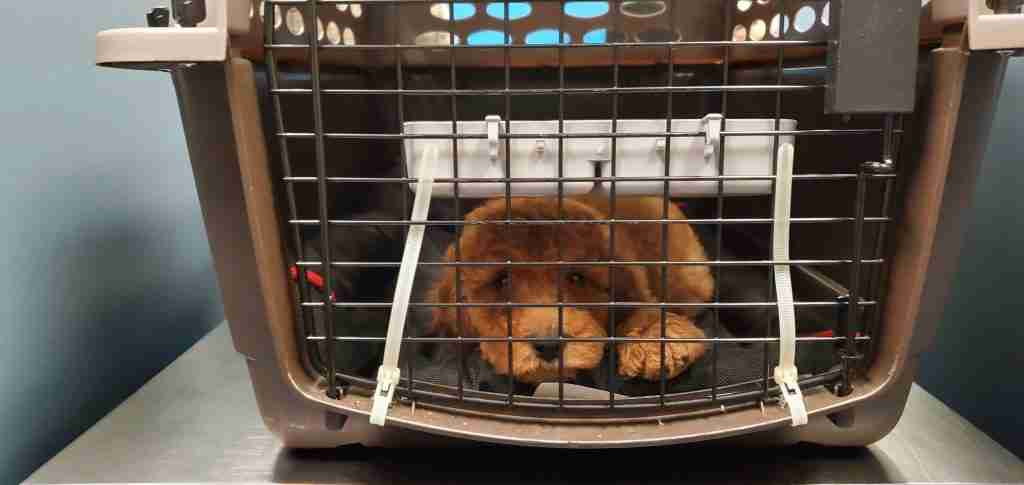
We confidently recommend utilizing a crate during your puppy’s first night in a new home. A crate, when introduced correctly, becomes your puppy’s structured sanctuary – a secure, calming space they can call their own.
Why is Crate Training So Effective the First Night?
- Facilitates Effortless Potty Training: Puppies naturally avoid soiling their sleeping area. The crate encourages them to hold it and wait for scheduled potty breaks.
- Builds Independence and Confidence: Puppies who learn to self-soothe and sleep alone from the beginning tend to be more adaptable and relaxed long-term.
- Ensures Safety: Keeps your curious puppy from chewing dangerous objects or wandering unsupervised.
- Creates Predictability: Crates help establish a nighttime rhythm and comfort through routine.
Think of the crate not as confinement, but as your puppy’s own luxury suite – quiet, comforting, and safe.
But What If You Let the Puppy Sleep in Your Bed?
While it might seem kind-hearted to invite your puppy into bed for those first few nights, unless co-sleeping is your long-term plan, it may complicate the transition.
- Creates Confusion: Starting in bed sends a mixed message if you plan to transition to a crate later.
- Delays Potty Training: A large bed doesn’t encourage your puppy to hold it.
- Interrupts Your Sleep: Puppies wake frequently and may whine, chew, or fidget.
We recently helped a family who adopted a beautiful Goldendoodle from us. They chose to let the puppy sleep in their bed initially, thinking it would provide comfort. But when they later tried to introduce crate training, the puppy resisted. Reversing this routine took time, patience, and several sleepless nights.
Making the First Night in the Crate a Success
If you’re wondering what to do the first night with a puppy, here are a few tips:
- Choose the Right Crate: Size matters – enough room to stand and turn, but not roam.
- Make it Cozy: Use plush bedding, a safe chew toy, and something with a familiar scent (like a blanket from the breeder).
- Keep it Close: Place the crate in your bedroom to ease anxiety and allow for potty alerts.
- Stick to a Routine: Final potty break before bed. Keep overnight outings calm and quick.
- Handle Whining Wisely: Wait for pauses before responding. Comfort, don’t coddle. Stay calm.
What If Crate Training Isn’t Right for You?
While we believe puppy crate training offers the most structure and success, we recognize that some families prefer alternatives. If that’s you:
- Use a confined, puppy-proofed area like a laundry room or bathroom.
- Provide a comfortable dog bed and puppy pads, understanding house training may take longer.
- Maintain a predictable routine and consistent rules.
The Happy Doodle Farm Advantage: Pre-trained Puppy
Navigating your puppy’s first night is just the beginning. That’s why so many families choose Happy Doodle Farm — for more than just beautiful puppies. We offer peace of mind and expertise.
If you want to skip the training hassle entirely, our Turnkey Companion Program delivers puppies who already understand crate routines, potty expectations, and household etiquette.
Explore how we can make puppy ownership joyful and stress-free:
Conclusion: Invest in a Peaceful Start
Where should a puppy sleep the first night? In a loving, secure crate beside you. This gentle structure encourages independence, simplifies training, and sets the stage for a well-adjusted, confident dog.
At Happy Doodle Farm, our goal is to redefine puppy ownership. Whether you go the DIY route or choose our expert-trained companions, we’re here to guide your journey from day one. Let’s make the transition effortless and joyful.
Frequently Asked Questions: Puppy’s First Night at Home
Q: Should I let my puppy sleep with me on the first night?
A: Only if your long-term plan is to co-sleep. Letting a puppy sleep in your bed for “just a few nights” can lead to confusion and make crate training more difficult later.
Q: Where should a puppy sleep the first night?
A: Ideally, in a crate placed beside your bed. This provides comfort, promotes bonding, and sets the stage for successful crate and potty training.
Q: What if my puppy cries in the crate?
A: Some whining is normal. Reassure your puppy briefly but don’t give in to attention-seeking cries. Reward calm behavior and maintain consistency.
Q: Can a puppy sleep through the night without a potty break?
A: Most young puppies need a potty break every 3–4 hours during the night. This improves quickly with consistent training and routine.
Q: Is crate training cruel?
A: Not at all. When introduced positively, crates become safe spaces that provide security and comfort, similar to a den or crib.
Q: What size crate should I use for the first night?
A: Choose a crate just big enough for the puppy to stand up, turn around, and lie down. Avoid excess space to encourage cleanliness and reduce anxiety.
Q: Can I use a playpen or confined room instead of a crate?
A: Yes, but expect slower potty training progress and more supervision. A confined space with a bed and potty pads can work if crate training is not an option.