
Denver Urban Dog Socialization: How We Train Service Dog Candidates for Real-World Environments
For families requiring a specialized clinical companion, therapy dog, or highly trained Executive Companion, “well-behaved” is not a sufficient standard. A dog that performs beautifully in a familiar backyard but falls apart in a hotel lobby, a crowded restaurant, or a pediatric therapy suite is not a finished dog. Training purely in a facility with one trainer is a recipe for failure and at Happy Doodle Farm our puppy training goal is a zero fail mission. We want to identify deficits and remedy them before they become an issue. It’s why we want to train in as many diverse environments as possible.
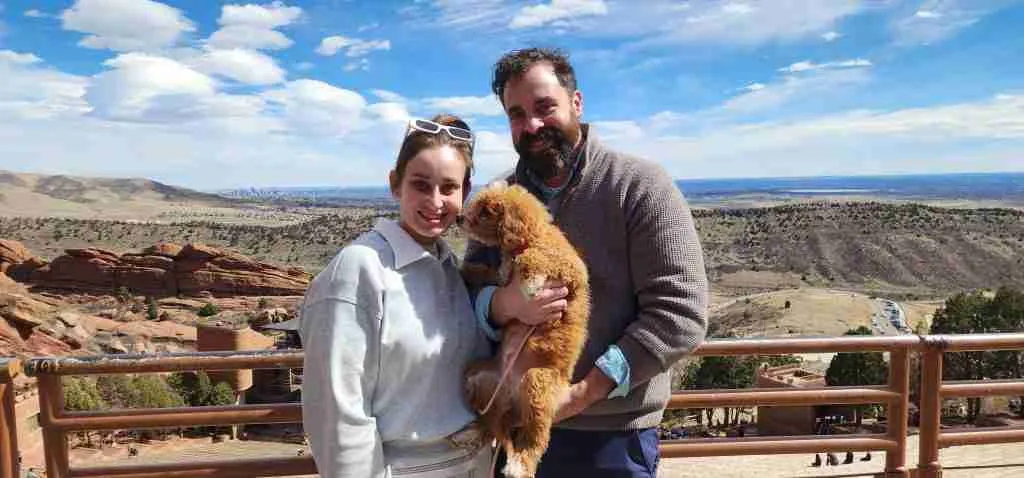
Absolute bomb-proof reliability is not accidental, it is engineered.
When Happy Doodle Farm transported Goldie, a Mini Goldendoodle Executive Residency candidate, to Denver, Colorado for a private,pre-completion event delivery, her training did not pause for the trip. Active environmental conditioning is a deliberate, scheduled phase of the Aspen Protocol. By removing a candidate from familiar training grounds and placing them inside a high-stimulation metropolitan environment, we stress-test and solidify the behavioral stability required for our most demanding placements. We can prepare him for many situations at our home and in our town, but exposing him to the sights and sounds of Denver is best done in the city and areas where he will actually live.
Here is how we used three specific Denver locations as live training tools—and what each phase is designed to produce.
Phase 1: High-Altitude Terrain Training at Red Rocks Amphitheatre
Physical and mental resilience are inseparable. A dog that navigates confidently across unfamiliar terrain—steep angles, unpredictable surfaces, elevation—is a dog building the physical trust in its handler that transfers directly to behavioral compliance under pressure.
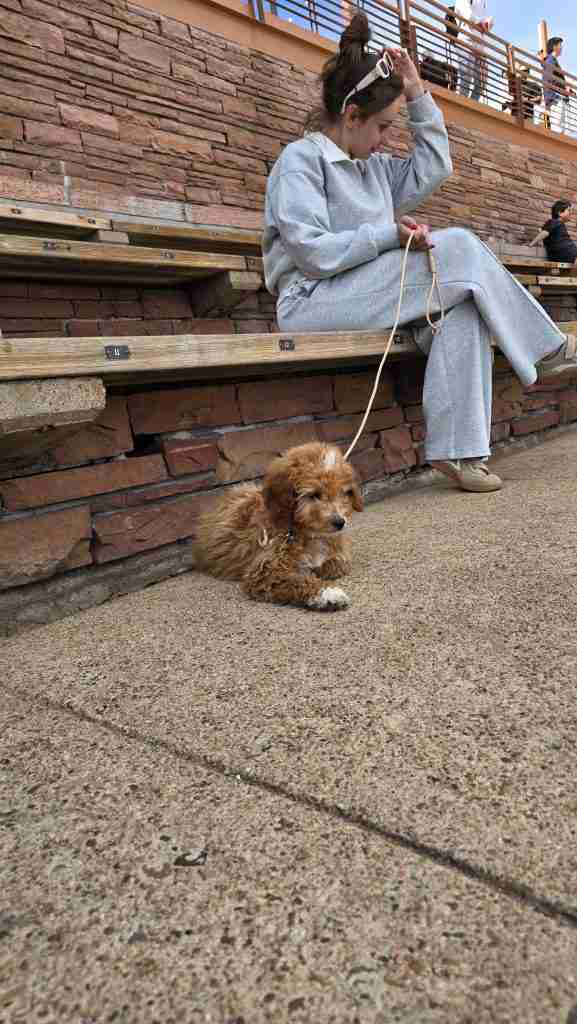
Our first conditioning module took place at Red Rocks Amphitheatre, one of Denver’s most iconic and physically demanding public spaces. The objectives were:
- Novel terrain navigation: Massive sandstone structures, steep stadium seating, and irregular stone surfaces require a dog to physically problem-solve while maintaining handler focus.
- High-altitude acclimation: Denver sits at 5,280 feet. Red Rocks pushes closer to 6,450. Altitude affects respiratory rate and energy regulation; a candidate must learn to maintain a calm behavioral baseline even when her body is working harder.
- Crowd exposure at variable density: Red Rocks draws visitors throughout the day in unpredictable clusters—a controlled environment for managing arousal around strangers without the overwhelming density of a downtown street.
Goldie navigated the terrain, the altitude, and the visitors at an expected pace for a puppy that’s 12 weeks old. We were able to observe some items to work with her on and identify areas where her training is ahead of pace.
Phase 2: Service Dog Urban Socialization — Downtown Denver
A premier Executive Companion or clinical asset must be able to navigate cities, airports, convention centers, and crowded public corridors without behavioral disruption. Urban environments are the most demanding real-world test of a dog’s socialization—and the hardest to replicate in a rural training facility.
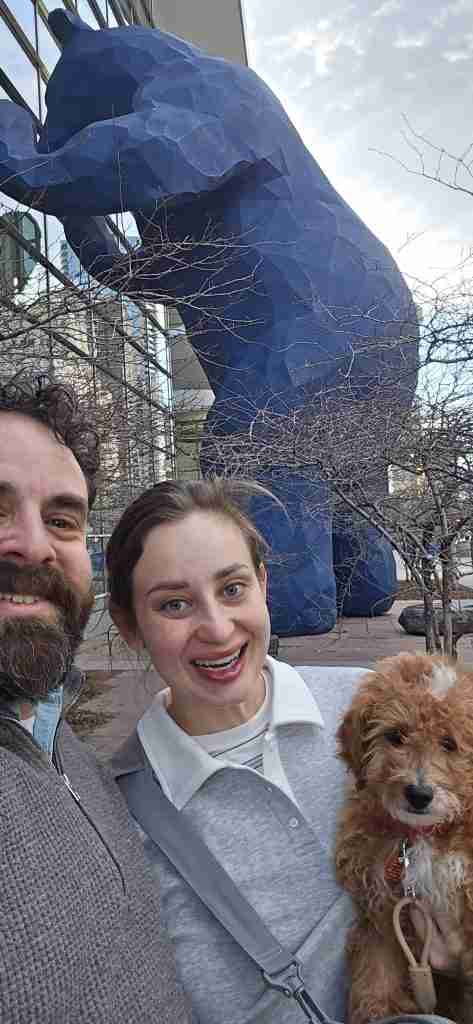
We moved Goldie into the heart of downtown Denver for active leash-handling drills outside the Colorado Convention Center and the Temple Hoyne Buell Theatre.
The specific stimuli we exposed her to:
- Unpredictable pedestrian traffic: Dense, variable, and directionally chaotic with strangers approaching from multiple angles simultaneously.
- Heavy vehicle traffic and sirens: Street-level noise from buses, emergency vehicles, and construction creates the kind of sudden, high-decibel triggers that reveal latent reactivity.
- Echoing concrete acoustics: Sound behaves differently in urban canyons than in open fields. Dogs unaccustomed to echo and reverberation can startle; this exposure eliminates that response.
- The Big Blue Bear: The 40-foot sculpture outside the Convention Center is a specific, deliberate trigger. Large, visually unusual objects are a common reactivity flashpoint. Goldie approached without hesitation. It’s hard to anticipate how a puppy or human will react to seeing a 40 foot tall bear.
Throughout every stimulus exposure, we ran active obedience commands—sit, down, heel, stay, eye contact—to confirm that Goldie could maintain focus on her handler in the middle of genuine chaos. That is the standard. Not tolerance. Active compliance.
Phase 3: Tactile Conditioning and Grooming Desensitization in Lakewood, CO
Clinical placements, therapy dog programs, and family environments with young children share a common requirement: the dog must accept intensive physical handling without reactivity. A child with autism spectrum disorder may grip tightly without warning. A therapy facility requires the dog to hold still during assessment procedures. A family home means rough handling by toddlers is inevitable.
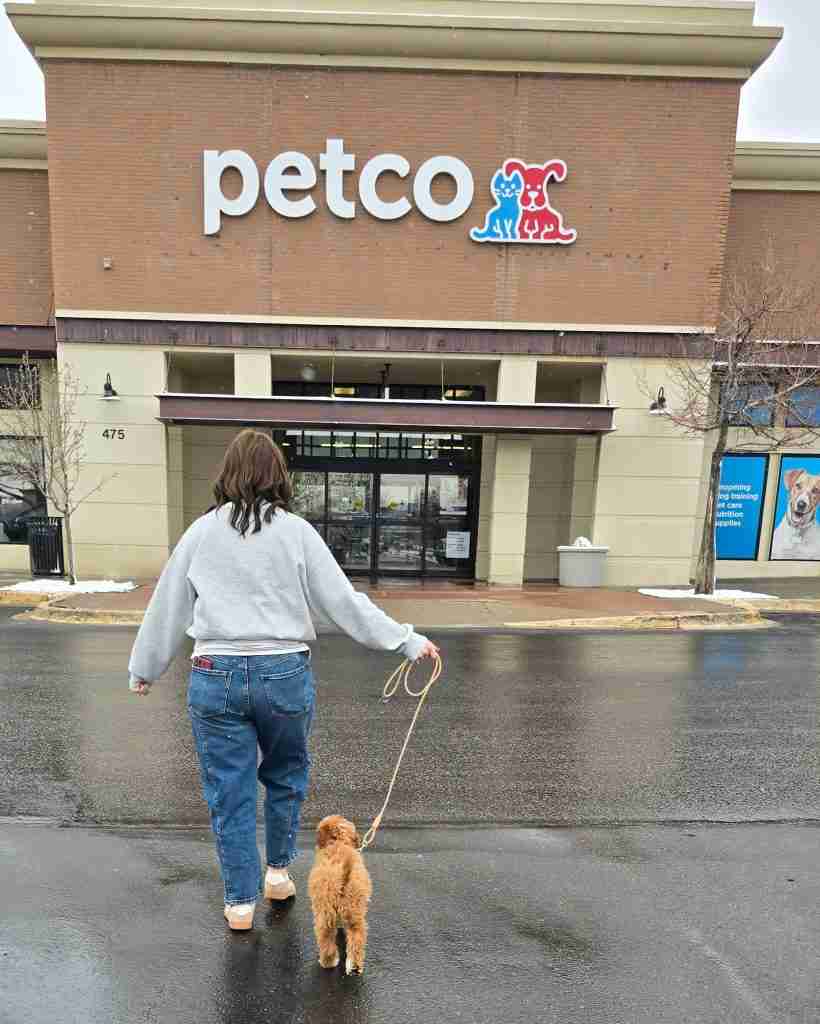
To reinforce tactile tolerance, we took Goldie to a busy retail pet supply store in Lakewood, Colorado—navigating crowded aisles, unfamiliar scents, and spontaneous interactions with strangers and other dogs.
Immediately following, we conducted a full professional grooming session: bath, high-velocity blowout dryer, brush-out, and handling assessment.
To a standard owner, a bath is hygiene. In the Aspen Protocol, it is a critical tactile conditioning checkpoint:
- Water immersion and temperature variation: Tests sensory tolerance under unfamiliar physical stimuli.
- High-velocity dryer noise: One of the highest-decibel experiences a dog encounters in a controlled setting. A dog that remains calm through this has demonstrated genuine noise desensitization, not just habituation to household sounds.
- Extended handler contact and manipulation: Full-body handling by an unfamiliar groomer confirms the transferability of cooperation beyond the primary handler.
Goldie remained relaxed and cooperative throughout.
The Result: Environmental Neutrality Proven Under Live Conditions
That same evening, Goldie walked into a high-energy children’s event—balloons, screaming kids, sudden movements, total chaos—and remained completely calm.
That is not luck. That is the Aspen Protocol working exactly as designed.
A dog that can transition from a flight, to high-altitude terrain, to downtown traffic, to a grooming table, to a chaotic family event in a single weekend—and settle quietly in a hotel room at the end of it—is a dog that is genuinely ready to operate in the world.
This intensive urban socialization is exactly why Goldie was able to walk into a surprise reveal later that evening with perfect composure. [Read the full logistics of Goldie’s bespoke concierge delivery in Denver →]
Who This Level of Training Is For
Not every family needs a dog trained to this standard. But some do.
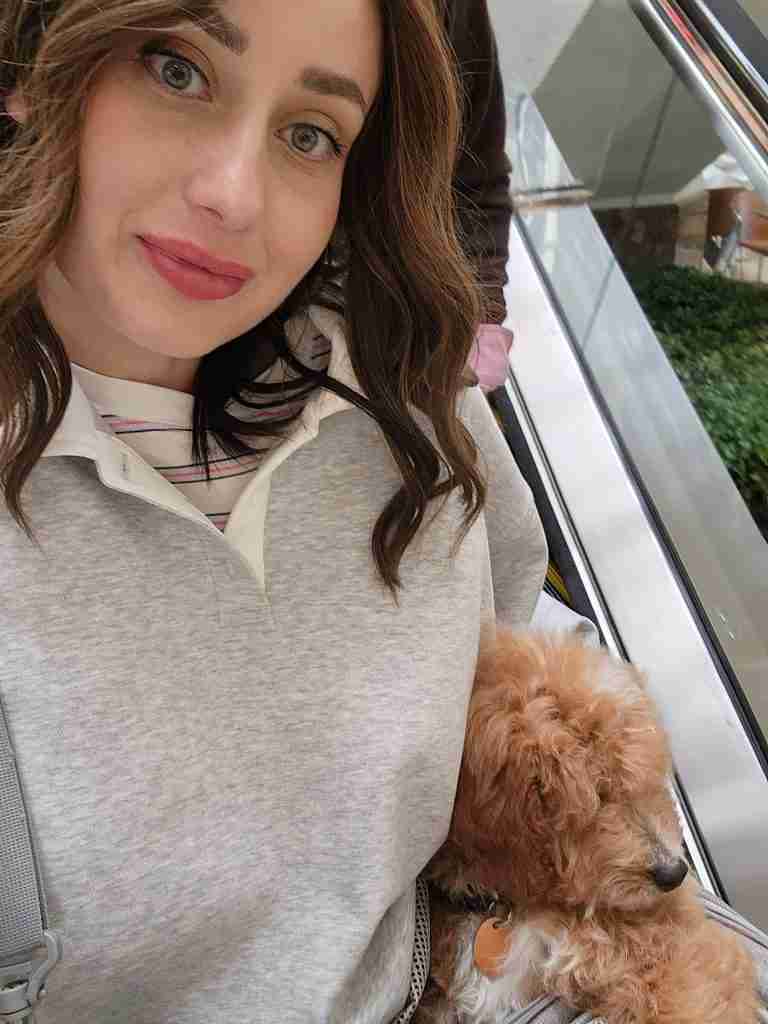
If you are placing a dog in a pediatric therapy program, an ADA-compliant clinical facility, an autism support environment, or a high-traffic private estate, a dog that is merely “good with people” is not sufficient.
Families navigating complex clinical needs or managing demanding private enterprises do not have the time to become professional dog trainers. Their focus must remain on their family’s care and their own endeavors. That is why they outsource the behavioral engineering to us. You need a dog that has been exposed to every category of real-world stimulus and has demonstrated reliability under each one—because that dog is going to encounter all of those things in the course of a normal placement.
Happy Doodle Farm trains every Executive Residency candidate to this standard. Whether your placement is for a private estate, a family home with young children, or a clinical therapeutic environment, the conditioning does not change.
Frequently Asked Questions
What is environmental conditioning for service dogs and therapy dogs? Environmental conditioning is the deliberate, structured exposure of a dog candidate to novel, high-stimulation environments—urban traffic, crowds, altitude, unfamiliar terrain, loud noise, and intensive physical handling—to build reliable behavioral neutrality. At Happy Doodle Farm, environmental conditioning is a scheduled phase of the Aspen Protocol, not an incidental byproduct of training.
Can service dog and therapy dog candidates be trained outside of Kentucky? Yes. Happy Doodle Farm conducts environmental conditioning modules in metropolitan areas across the United States as part of the Aspen Protocol. Urban environments—with their density of stimuli, noise, and unpredictable human traffic—provide conditioning opportunities that cannot be replicated on a rural farm property.
What is the difference between a service dog, a therapy dog, and an emotional support animal? A service dog is individually trained to perform specific tasks for a person with a disability and has public access rights under the ADA. A therapy dog is trained to provide comfort to multiple people in clinical or institutional settings and does not have individual public access rights. An emotional support animal provides comfort through companionship and requires no specialized task training. Happy Doodle Farm produces candidates trained for all three designations, as well as highly trained Executive Companions for private families who require the highest standard of behavioral reliability without a clinical designation.
What is the Aspen Protocol? The Aspen Protocol is Happy Doodle Farm’s proprietary training methodology, developed and led by co-founder Aspen Delaney. It governs every candidate from birth through placement—covering in-home whelping, early neurological stimulation, environmental conditioning, obedience development, and behavioral benchmarks specific to the candidate’s placement environment. Training does not pause during travel. Every new environment is an active conditioning opportunity.
Do you train Goldendoodles as service dogs or therapy dogs? Yes. Happy Doodle Farm has placed trained Goldendoodle and Mini Goldendoodle candidates in clinical therapy programs, private estates, autism support environments, and family homes requiring the highest standard of behavioral reliability. Our candidates are not task-trained for specific ADA designations by default—task training for specific disabilities is customized during the clinical consultation process for placements requiring it.
How long does environmental conditioning take? Environmental conditioning is not a standalone phase—it is integrated throughout the Aspen Protocol residency. Our Executive Companion placements begin at four months. Estate Integration residencies run eight months. Dynasty Commission placements run twelve months. The longer the residency, the greater the diversity and depth of environmental exposure the candidate receives before placement.
What cities do you deliver trained dogs to? Happy Doodle Farm provides bespoke concierge delivery throughout the continental United States. Recent placements have included Manhattan, Beverly Hills, Denver, Dallas, Alamo California, Austin, New Jersey, and Northern Virginia. International delivery is available and quoted individually.
CLOSING CTA
Excellence is our baseline.
If your family or facility requires a dog trained to genuine real-world reliability—not just a well-behaved puppy—we invite you to explore our bespoke placement process.
[Schedule a clinical or private placement consultation →] (link to: happydoodlefarm.com/puppy-training/)